

‘El camino de la almazara’ has been selected as one of the eighteen awarded works at the 17th Spanish Biennial of Architecture and Urbanism (BEAU) / Flujos Comunes
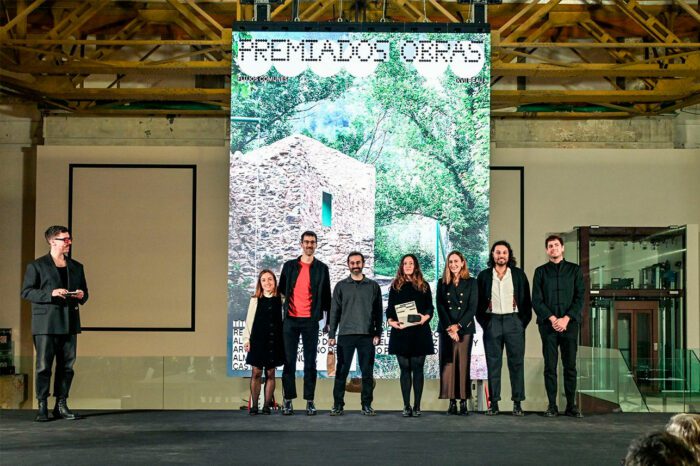
Our project “El camino de la almazara”, the regeneration of the almazara–washhouse space in the village of La Artejuela, Arañuel, carried out together with mha and Carpe, has been selected as one of the eighteen awarded works at the 17th Spanish Biennial of Architecture and Urbanism (BEAU) / Flujos Comunes, curated by Ander Bados and Miguel Ramón and promoted by the Ministry of Housing and Urban Agenda, the Spanish Council of Architects’ Associations (CSCAE), and the Arquia Foundation.
The award ceremony, which we attended with great pleasure and enthusiasm, took place last December 11th at La Térmica Cultural in Ponferrada, an incredible space that has been revived and transformed from a former thermal power plant into a multi-purpose venue dedicated to art and knowledge.
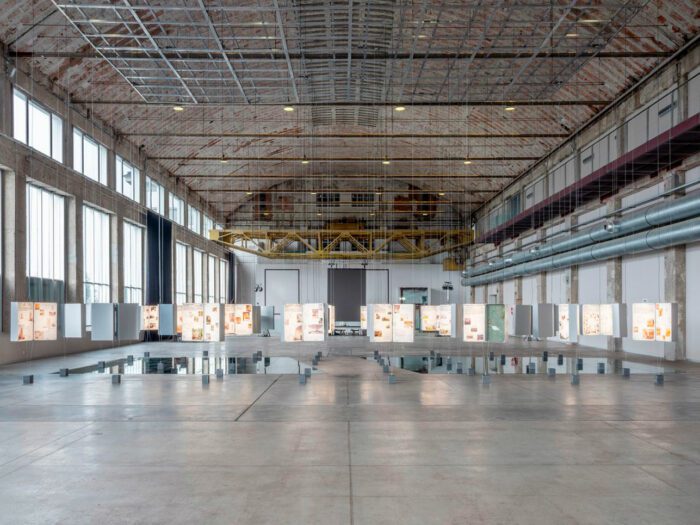
In addition to the award ceremony, the exhibition featuring all the awarded proposals (eighteen built works, fifteen dissemination projects, and twenty final degree projects) was inaugurated. The exhibition can be visited at La Térmica Cultural until March 15th, 2026, and will later travel to other cities such as Madrid, Valencia, Tokyo, and Lima.
We are very happy with the recognition the project is receiving. This is the most recent one, but we have previously received others: a Mention in the “Urbanism and Landscape” category at the COACV Awards 2025, an Honourable Mention in the Architecture category at the 24th Ascer Ceramics Awards, selection in the Architecture Awards organised by the CSCAE, and finalist at the Architecture Plus by Daikin Awards organised by Grupo Vía in the Under40 category.

We are very proud that a small project, almost an act of acupuncture, located in a remote village in an inland region of the province of Castelló, has been recognised by so many prestigious juries alongside works of greater scale and scope. From the very beginning, we wanted it to be a project deeply rooted in its territory—sensitive, humble, and respectful of its surroundings, yet not mimetic—where the use of ceramic could merge with the natural environment and, rather than radically transforming it, highlight the identity of the place and recover its heritage and community value.