

Building a Good Home
- tales
- /
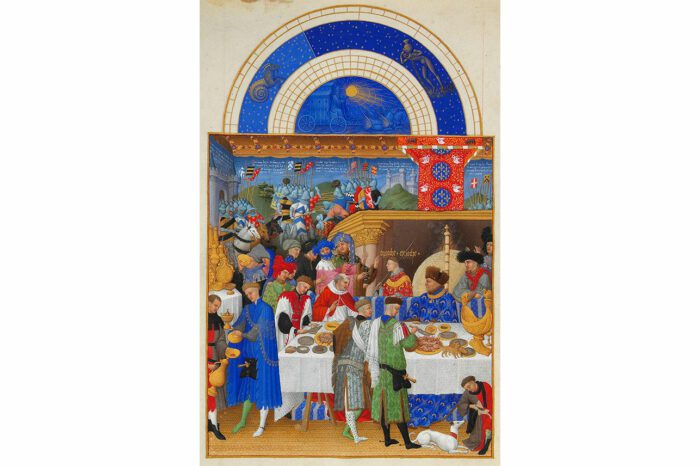
Most of the projects we work on at Piano Piano are private homes of different kinds: renovations, refurbishments and new-build houses. Sometimes the developer is not the final user, although in most cases they are. And when that is the case, alongside the considerable financial effort and planning involved, there is also the excitement of having a project of your own. Keeping that initial excitement alive throughout the process for those who place their trust in us is something we care deeply about at the studio, and something that comes with a great sense of responsibility.
Are you looking for an architecture studio to design your home?
If you have made it this far because you are looking for an architecture studio that can help shape the home you have been dreaming of, we invite you to keep reading.
For some time now, we have been reflecting on the need to explain our work as a studio of women architects, and to make clear why we are necessary if your aim is to have a good home. Perhaps in the past there was less need to do so because, for better or worse, everyone seemed to know what an Architect did – yes, with a capital A and, invariably, a man – and there was a certain shared respect for the profession.
Making architecture in strange times
But we now find ourselves in a strange moment. Competition has multiplied, often fuelled by increasingly precarious working conditions or professional intrusion; social media accelerates trends and makes them increasingly volatile; and a craft-oriented studio like ours, with a strong focus on detail, can sometimes be perceived as something superfluous or unnecessary. By detail, we do not mean something added on at the end, but rather a way of delving into the depths of a project.
At the same time, obstacles are growing due to factors beyond our control: economic instability and rising prices which, at best, stabilise but rarely come back down. The initial excitement can gradually become buried beneath unpredictable costs and the considerable effort required to find companies capable of building certain projects and adapting to the desired timeframes. Bureaucracy, meanwhile, slows down every process, and delays in obtaining building permits can sometimes make the possibility of building unfeasible altogether.
Building a home with AI
And, to make matters even more complicated, we cannot ignore the fact that Artificial Intelligence at user level has democratised the production of images and ideas to such an extent that it is becoming increasingly difficult to distinguish knowledge from mere appearance, or to propose solutions that move beyond a preconceived image. Sometimes this means losing a certain amount of control when a client arrives with AI-generated images that they themselves can no longer see beyond. And we accept that it is difficult to compete with something so easy and so eager to please.
It might seem that involving an architecture studio simply means more bureaucracy, plus the need to deal with a construction company as well. “What a complete nuisance, when someone else is offering a two-in-one deal,” more than one person might think.
Or someone might even ask: why work with you when I can design my project with AI (surely I can find someone to sign it off afterwards), or simply go with whoever can offer me something faster, cheaper and more eye-catching? Oh, come on, you know better than that…
Architecture that doesn’t have to prove it is good
Taking all of this on board, how can we make architecture that does not need to constantly prove that it is good and necessary, in a context that seems to demand precisely that of us?
Paradoxically, professional intrusion, precarious working conditions and the possibility for someone without architectural knowledge to use tools that make them believe they can shape an architectural project do not reduce the need for good architecture. In our view, they make that need even more evident. Because, unless you keep your eyes wide open, it is increasingly easy to be sold a pig in a poke. Alejandro de la Sota, a mid-twentieth-century Spanish architect, turned the familiar expression on its head and argued for precisely the opposite: giving people something better than what they thought they were getting. The idea was wonderful because it condensed an entire approach to architecture into something very simple: offering more than what appears to be there.
So, at this moment of uncertainty, at Piano Piano we hold on to that idea as a way of distinguishing ourselves from those who compete in a crude or generic way for attention, rely entirely on trivial trends, or attempt to demonstrate their “high value” through commercial slogans that are ultimately empty of content. Because if architecture is good, its value will reveal itself through use and over time, while responding to a place, to the people who inhabit it and to the real possibilities of building it.
And we know that all of this is difficult in such a competitive environment – one that is very often unfair -where being visible seems to require endless images or grandiose narratives which, in our view, become hollow when their sole purpose is to justify the value of a piece of architecture. Bad architecture, paradoxically, often presents itself as quick and easy, apparently free from all those obstacles beyond the project itself that we mentioned a few paragraphs ago.
So what are we here for?
For us, sh,aping a home for someone means entering other people’s lives, even snooping a little into their privacy, and thinking carefully about their domestic routines with dedication, care and closeness. This way of working is very different from simply replicating a solution that has worked -or is assumed to work- in another context, for other people, in another place. And rightly so, don’t you think? We are trying to improve the lives of real people, with names and surnames!
And that is why, beyond a process that can be cumbersome and is certainly not without its difficulties – which, to some extent, we accept as part of it -making a home should remain exciting for the person who has decided to embark on it. That is what we aim for at Piano Piano. In our day-to-day work, we try to make sure that those who place their trust in us feel that it can be this way: that the excitement can survive despite the inevitable obstacles along the road. We try to work as a team and to explain things along the way. And that also means talking openly about difficulties, being realistic and allowing processes to take longer when the project requires it.
For us, working rigorously has a lot to do with this: knowing where the difficulties lie and not hiding them, but not allowing them to take over everything either.
And this is not about turning our backs on what is coming-far from it. We will use new tools, our way of working will change and we will adapt to new times. But along the way, we do not want to forget why we do things in a certain way, and who we are doing them for.
* The image is the January miniature from the manuscript The Très Riches Heures of the Duke of Berry, by the brothers Herman, Paul and Johan Limbourg. It conveys abundance, ceremony, accumulation, luxury and the representation of power… too much of everything, a need to demonstrate value.